
Most people think the credit trap is about math. Interest rates. Minimum payments. APR percentages printed in tiny font. But if you look closely, the real trap is behavioral. It is a system designed to reward short term comfort and quietly punish long term neglect.
You swipe a card to solve a problem today. Groceries. Car repair. A slow business month. The bill arrives later, softened by a minimum payment that looks manageable. That small number creates the illusion of progress, even though most of it goes straight to interest. The balance barely moves.
It is the same pattern that pushes some entrepreneurs to search for structured solutions like business debt relief when business liabilities start compounding. The turning point is not panic. It is clarity. The moment you see the system for what it is, you can begin to step outside of it.
The Psychology Behind the Minimum Payment Illusion
Credit cards are not accidental traps. They are carefully engineered financial products. The minimum payment is designed to keep you current while extending the life of the debt. According to guidance from the Consumer Financial Protection Bureau on how credit card interest works, paying only the minimum dramatically increases the total cost of what you purchased.
But here is what makes it powerful. The minimum payment feels responsible. You paid on time. You avoided a late fee. You stayed in good standing. Psychologically, it feels like success.
In reality, it often locks you into a long repayment timeline where interest compounds faster than principal shrinks. When that happens across multiple cards, the debt becomes sticky. It resists progress.
The credit trap is less about irresponsibility and more about gradual normalization. A balance becomes familiar. Interest becomes background noise. And “I will pay it off later” becomes a permanent plan.
Recognizing the Real Cost of High Interest Debt
High interest debt, especially from credit cards or payday loans, feeds on urgency. Payday loans, in particular, carry fees that translate into triple digit annual percentage rates. The Federal Trade Commission explains the risks of payday lending and how quickly costs escalate. What makes these products dangerous is not just the rate. It is the cycle. You borrow to solve a short term cash gap. When the next paycheck arrives, a large portion goes to repayment. That leaves you short again. So you borrow again.
Credit cards operate on a similar but slower loop. Interest accrues daily. New purchases stack onto old balances. If you are only covering interest and a sliver of principal, the debt becomes semi permanent. Breaking free starts with one uncomfortable step. Calculate the true payoff timeline if you only make minimum payments. Many card statements include this information. Seeing that a modest balance could take ten or twenty years to clear is often the wake up call.
Treat Debt Like a System, Not a Crisis
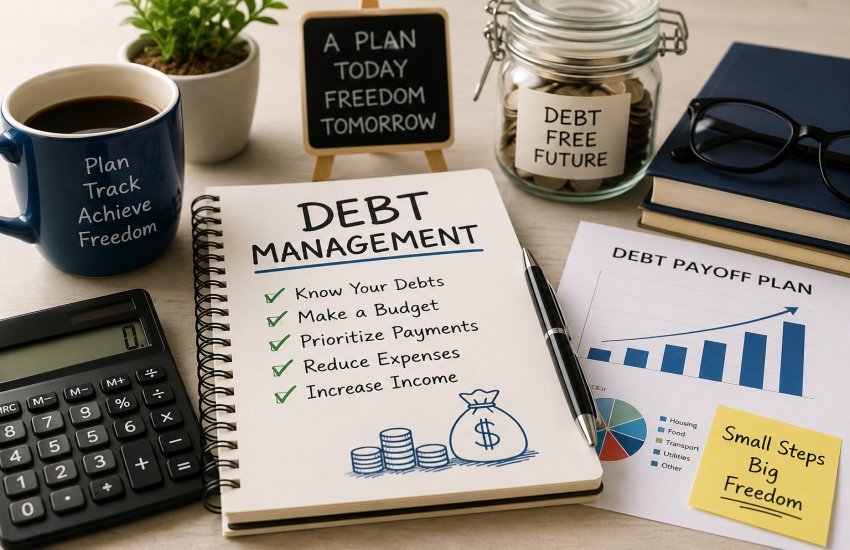
Here is the shift most people overlook. Debt freedom is not about one heroic payment. It is about redesigning your financial system. Start with a complete inventory. List every balance, interest rate, and minimum payment. No guessing. No rounding down. Write the exact numbers.
Then build a zero-based budget. Every dollar of income gets assigned a role. Essentials first. Housing, food, utilities, transportation. Minimum payments next. After that, decide where your extra dollar goes.
Financial experts often recommend either the snowball method or the avalanche method. With the snowball, you pay off the smallest balance first for quick wins. With the avalanche, you target the highest interest rate to reduce total cost. Both work. What matters most is consistency.
When you treat debt repayment as a recurring system, not a temporary burst of motivation, you reduce decision fatigue. The plan runs automatically each month.
Cutting Off the Oxygen Supply
A less discussed but critical step is stopping new debt accumulation. You cannot climb out of a hole while digging deeper.
That may mean temporarily putting credit cards away. It may mean switching to a debit only approach. It might involve building a small emergency fund, even while paying down balances, so that unexpected expenses do not force you back into borrowing.
This is where discipline enters the picture. Not extreme deprivation, but structured restraint. If you do not create boundaries around spending, the credit trap quietly rebuilds itself.
Rebuilding Cash Flow Confidence
Debt often erodes more than money. It chips away at confidence. Each statement feels like a reminder of past decisions.
To reverse that, track progress visually. Update your balance totals monthly. Highlight reductions. Celebrate milestones, even small ones. A one hundred dollar drop is progress. A paid off card is proof that the system works.
As balances shrink, redirect freed up minimum payments toward the next target. This accelerates momentum. What once felt immovable begins to shift.
Understanding That Freedom Is Behavioral
Breaking free from the credit trap is not about hating credit. Credit itself is a tool. The trap forms when the tool controls the user.
Once balances are cleared, the same behavioral awareness that got you out keeps you out. Pay statements in full. Review spending weekly. Question impulse purchases. Maintain an emergency cushion.
The long term goal is not just zero debt. It is control. Control over cash flow. Control over financial decisions. Control over your future plans.
When you step back, the credit trap loses its mystery. It is a cycle fueled by interest, convenience, and minimum payments that look harmless. Structured budgeting, prioritization, and steady discipline dismantle it piece by piece.
Freedom does not arrive in a single dramatic moment. It shows up gradually, in smaller balances, fewer statements, and a growing sense that your money works for you instead of the other way around.

Read Dive is a leading technology blog focusing on different domains like Blockchain, AI, Chatbot, Fintech, Health Tech, Software Development and Testing. For guest blogging, please feel free to contact at readdive@gmail.com.