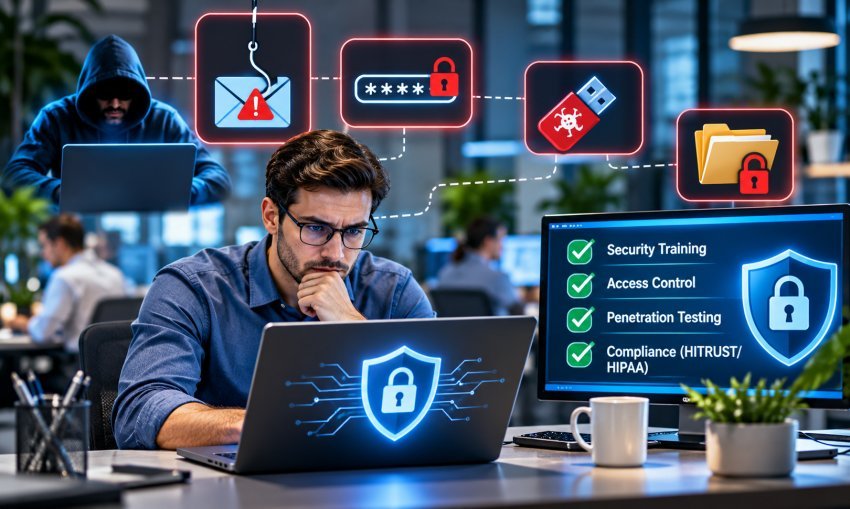
Humans are often seen as the weakest link in a cybersecurity program. Whether through limited awareness of best cybersecurity practices or manipulative tactics, human error remains the most common cause of cyberattacks. No matter how sophisticated your cybersecurity protocols are, human mistakes and accidents can leave your organization open to devastating cyberattacks.
With that in mind, are you prepared for the human-error threats you may face? In this post, we will examine human factors that facilitate cybersecurity breaches and recommend security measures to strengthen what is arguably the most fragile line of defense in your cybersecurity strategy.
What is the Human Factor?
The human factor refers to how human behaviors, cognition, and errors contribute to cybersecurity incidents. However, not all human factor risks look the same. There are two different ways to understand the cybersecurity threats caused by human error:
- Unintentional Errors: Unintentional errors create cybersecurity threats and result from a lack of awareness, poor judgment, or limited cognitive bandwidth.
- Intentional Errors: Intentional errors are typically deliberate attacks or errors carried out by individuals within the organization to bypass access points within your organization’s cybersecurity. These are more commonly known as “insider threats.”
Common Weak Points For Humans
Several threats exist online that you should be aware of. Here are the most common ones:
Weak Passwords
Weak passwords, password reuse, and using the same password for both home and office accounts are among the most common cybersecurity threats your organization faces. These increase your organization’s vulnerability because once attackers gain access to your systems, they can carry out attacks without you noticing.
Improper Handling of Data
When employees send data to the wrong recipient or fail to encrypt sensitive information when sending it to others, they also expose your organization to threats. Cyber attackers can exploit these accidents, exposing your organization to potential legal and financial risks.
Software Concerns
Employees often ignore important browser security alerts or turn off antivirus software to gain access to unauthorized software or websites. Disabling software that protects the network, postponing or ignoring prompts for system, and software updates can leave you vulnerable to threats you initially thought you were protected from.
Unregulated Data Access
Users may have access to information they shouldn’t. Restrict user access and account privileges. This limits abuse and the scope of breaches if a non-admin account is compromised.
Phishing Attacks
Hackers will often send emails containing links infected with credential-stealing malware to employees to gain access to the corporate network. Here, attackers exploit human behavior to access your organization’s systems.
Social Engineering Attacks
Social engineering attacks work similarly to phishing attacks. Hackers will also try to trick employees into exposing sensitive internal information via phone, in-person conversation, or internal messaging tools such as Slack.
How to Mitigate Risks
With this threat in mind, you can and should take steps to protect your organization and reduce risk. You can take the following steps to protect your organization:
Training Users
Education and awareness will be one of your strongest tools to defend against cyber attacks. If an employee opens a malicious link or uses a weak password, they will provide attackers with one of the easiest ways to breach your system and one of the hardest actions to control. In your trainings, you should do the following:
- Encourage staff not to open unsolicited emails where appropriate.
- Encourage staff not to use work networks for personal business; this includes not subscribing to newsletters, shopping, or using work-related email addresses for personal business.
- Create a quick and easy method for staff to report suspicious activities, such as “report phishing” buttons within the email system itself.
- Foster a culture of education and adopt the philosophy that there is no penalty for reporting a potential cyberattack in good faith; staff may be less likely to report issues if they fear punishment
- Look for misspellings, links, and logos that do not appear correct.
- Hover over links without clicking to see the link’s destination address.
Penetration Testing
A service that may be useful for your organization is penetration testing, or “pen testing.” A pen test is a security test that launches a mock cyberattack to find vulnerabilities in a company’s security system. These professionals will attempt to break into your system using the same methods that a malicious hacker would employ. This would be beneficial for your organization because you would be able to see what will look like if your organization is attacked, how employees would respond in a simulated attack, and where your vulnerabilities are. Here, you will gain useful information about where your weak points are and where to protect yourself in the future.
Compliance Certification
Another service that you can turn to to strengthen your cybersecurity is identifying a relevant compliance certification. Organizations in highly regulated industries like healthcare are often overwhelmed by the breadth of federal, state, and local regulations they need to keep up with, such as HIPAA. There is a high degree of complexity and ambiguity in many of these regulations, and complying with each demands considerable resources and efforts from your team.
Compliance certifications, such as HITRUST certification, help streamline the process of meeting compliance requirements in your industry. While this certification consolidates elements of standards such as HIPAA and ISO into one solution, there are important cybersecurity benefits from this certification. To receive a HITRUST certification, your organization is examined on how you handle sensitive information, access control, incident management, and risk management. Receiving this certification provides you with a solid foundation for adapting to the variety of cybersecurity threats you may encounter.
Key Takeaways
When examining the cybersecurity risks your organization could face, the human factor will be the one that is most likely to occur and one of the hardest to respond to. However, there are ways to manage this risk.
Becoming vigilance is essential for staying ahead of the threats you may encounter. This includes creating a security culture that seeks to educate employees on the variety of risks they face, actively identifying potential threats, and fortifying your defenses with services such as pen testing and compliance certifications on top of the strategies you are already using. Following these guidelines will significantly improve your security posture and ensure that your organization can withstand any attack you may face.

Nazy Fouladirad is President and COO of Tevora, a global leading cybersecurity consultancy. She has dedicated her career to creating a more secure business and online environment for organizations across the country and world. She is passionate about serving her community and acts as a board member for a local nonprofit organization.