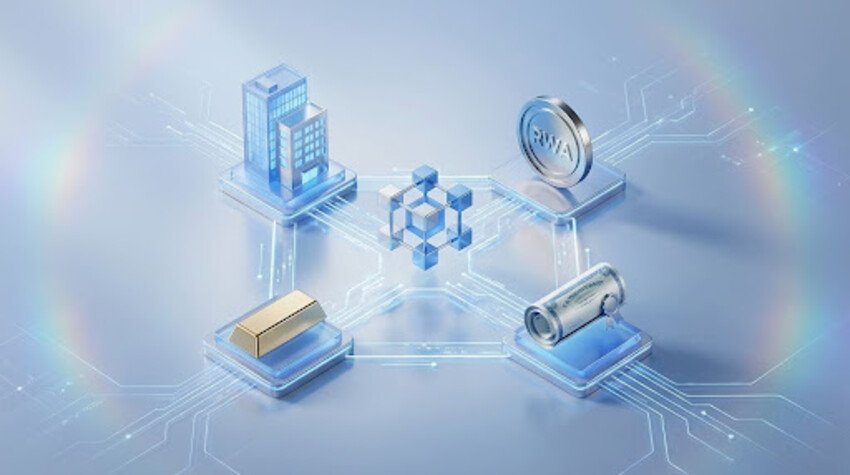
Real World Assets (RWAs) are becoming a significant sector within the cryptocurrency market. With tokenized assets reaching a valuation of $24 billion, the sector is projected for continued growth through 2026. This expansion is primarily driven by the demand for stable yields sourced from traditional finance instruments, such as U.S. Treasuries and real estate.
Top 10 RWA Coins for High Yield in 2026
Projects like ONDO, MANTRA, and Rexas Finance (RXS) currently lead the market. Together, they represent over $2.5 billion in Total Value Locked (TVL), offering estimated annual percentage yields (APY) between 5% and 10% through various DeFi integrations.
The following table compares the top 10 projects by market capitalization, yield potential, and primary use case:
| RWA Token | Current Price | Market Cap / TVL | Est. APY | Key Strength |
| ONDO | $0.85 | $1.2B / $2.5B TVL | 5-8% | Tokenized Treasuries & Stocks |
| MANTRA (OM) | $1.25 | $950M | Up to 10% | Compliant L1 Vaults |
| Rexas Finance (RXS) | $0.0015 | $15M | High Yields | No-code Asset Tokenization |
| Chainlink (LINK) | $9.83 | $6.5B | Yield Enabler | RWA Oracle Data |
| Stellar (XLM) | $0.18 | $5.3B | Stable Yields | Cross-Border RWAs |
| Centrifuge (CFG) | $0.45 | $250M | 7-12% | Invoice Financing Pools |
| Polymesh (POLYX) | $0.22 | $180M | Regulated APYs | Security Tokens |
| TrueFi (TRU) | $0.0358 | $47M | Credit Yields | Uncollateralized Loans |
| Chromia (CHR) | $0.18 | $150M | DeFi Hubs | Relational RWA Blockchain |
| Reserve Rights (RSR) | $0.007 | $350M | Stable Exposure | Stablecoin-Backed RWAs |
Detailed Introductions to the Top 10 RWAs
1. ONDO – Tokenized Treasuries and Stocks
Ondo Finance has established itself as a major provider of tokenized U.S. Treasuries. By early 2026, the project reached a TVL of $2.5 billion. Its USDY vaults provide liquidity with yields of 5-8% based on actual Treasury returns. The platform has recently expanded to include over 100 U.S. stocks and ETFs on the Solana network, allowing for 24/7 trading.
- Key Features: Includes the Ondo Nexus for USDC redemptions and significant backing from institutional investors like Coinbase.
2. MANTRA (OM) – Compliance-Focused Layer-1
MANTRA is a Layer-1 blockchain designed specifically for regulated RWAs. It offers compliant vaults and decentralized exchange (DEX) services. The project has secured a $1 billion deal to tokenize real estate in the UAE and utilizes Goldsky integration for real-time data processing.
- Key Features: Focuses on a full ecosystem for staking and compliant decentralized finance.
3. Rexas Finance (RXS) – Accessible Tokenization
Rexas Finance provides tools for users to tokenize physical assets—such as real estate, art, and commodities—without requiring coding knowledge. The project operates with a total supply of 1 billion tokens and allows users to earn yields through dedicated DeFi pools. With its expanding ecosystem, many investors are closely monitoring the RXS crypto price as it positions itself as the go-to platform for everyday asset tokenization.
- Key Features: Focuses on fractional ownership and global liquidity for private investors.
4. Chainlink (LINK) – Infrastructure and Oracle Services
While not a direct asset issuer, Chainlink is essential for the RWA sector. It provides the secure data feeds necessary to calculate yields for Treasuries and other assets. Its Cross-Chain Interoperability Protocol (CCIP) facilitates the movement of RWAs across different blockchain networks.
5. Stellar (XLM) – Global Payments and Asset Transfer
Stellar is optimized for low-cost, high-speed asset transfers. It is frequently used for tokenizing commodities and facilitating remittances in emerging markets. Its established infrastructure makes it a stable choice for high-volume RWA transactions.
6. Centrifuge (CFG) – Business Invoice Financing
Centrifuge connects small and medium-sized enterprises (SMEs) with DeFi capital. By tokenizing real-world business invoices, the platform offers yields between 7% and 12%. It uses “Tinlake” pools to finance these assets, often integrating with protocols like Aave to improve liquidity.
7. Polymesh (POLYX) – Institutional Security Tokens
Polymesh is a blockchain built specifically for regulated securities. It incorporates built-in KYC (Know Your Customer) and AML (Anti-Money Laundering) features at the protocol level. This makes it a preferred option for funds managing tokenized private equity.
8. TrueFi (TRU) – On-Chain Credit Markets
TrueFi facilitates uncollateralized loans to vetted institutional borrowers. Users can earn yields by staking TRU or participating in lending pools. The platform has originated over $1 billion in loans since its inception, focusing on risk-adjusted credit returns.
9. Chromia (CHR) – Relational Database for RWAs
Chromia uses a relational database structure, which is more efficient at handling complex data queries than standard blockchains. This makes it suitable for RWA applications that require extensive data management, such as property marketplaces.
10. Reserve Rights (RSR) – Stability Through Diversification
The Reserve Protocol allows for the creation of “RTokens,” which are stablecoins backed by baskets of other tokenized assets. RSR helps maintain the stability of these baskets, providing users with diversified exposure to RWAs while mitigating volatility.
Conclusion
The RWA sector is a growing bridge between traditional finance and blockchain. Projects like ONDO, MANTRA, and RXS are currently at the forefront of providing on-chain yields through tangible assets. These tokens are available on major exchanges like MEXC for those looking to diversify their portfolios with asset-backed yields.
Frequently Asked Questions (FAQ)
What are RWAs in the context of crypto?
WAs (Real World Assets) are digital tokens that represent physical or traditional financial assets, such as real estate or Treasury bonds. This allows them to be traded and used for earning yields on the blockchain.
Why are ONDO, MANTRA, and RXS popular for 2026?
These projects have gained traction due to their high TVL, institutional partnerships, and user-friendly tools that target consistent yields (around 5-10% APY).
How are RWA yields generated?
Yields are typically generated from the underlying asset’s real-world performance, such as interest from a government bond or rental income from a property.
What is the outlook for the RWA market?
While currently valued at $24 billion, many analysts expect the market to grow significantly by 2030 as more traditional assets are moved onto blockchain networks.

Read Dive is a leading technology blog focusing on different domains like Blockchain, AI, Chatbot, Fintech, Health Tech, Software Development and Testing. For guest blogging, please feel free to contact at readdive@gmail.com.