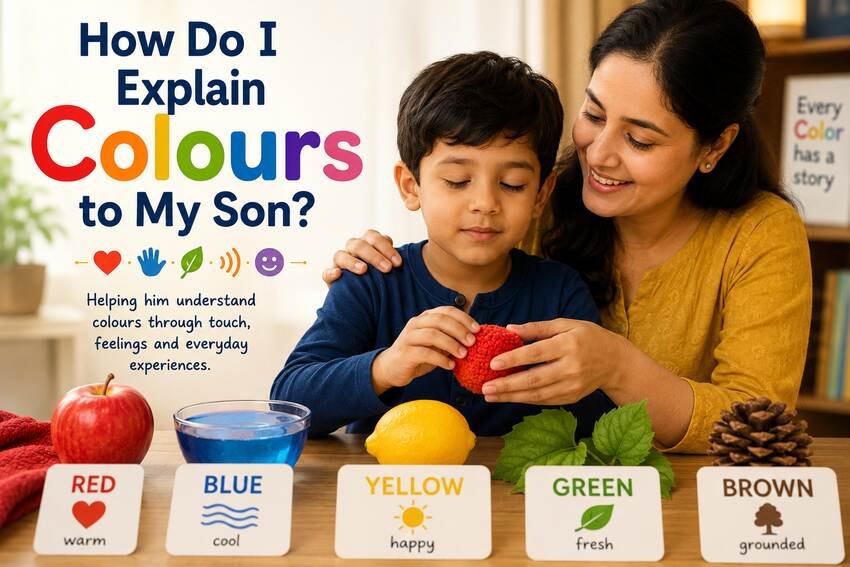
When a parent says, “My son can’t see. How do I explain colours to him?”, it can feel impossible, like, where do you even start? Colours are usually understood through sight, but a child who can’t see still has a way to learn about colours using other senses, plus the little things that happen every day. With patience and a bit of imagination, you can guide him so he “gets” what colours stand for in the world around him.
Understanding how a blind child learns colours
Even without vision, kids can still form a solid sense of colours by pairing them with touch, taste, smell, sound, and even feelings. They do not “watch” a colour the way others do; instead, they learn what that colour stands for in real situations. So, instead of only guessing what something looks like, he can understand that grass is green, or that strawberries are red, even when his eyes can’t take it in. The trick is to keep explanations practical, relatable and then say them again and again, during normal routines.
Use sensory experiences
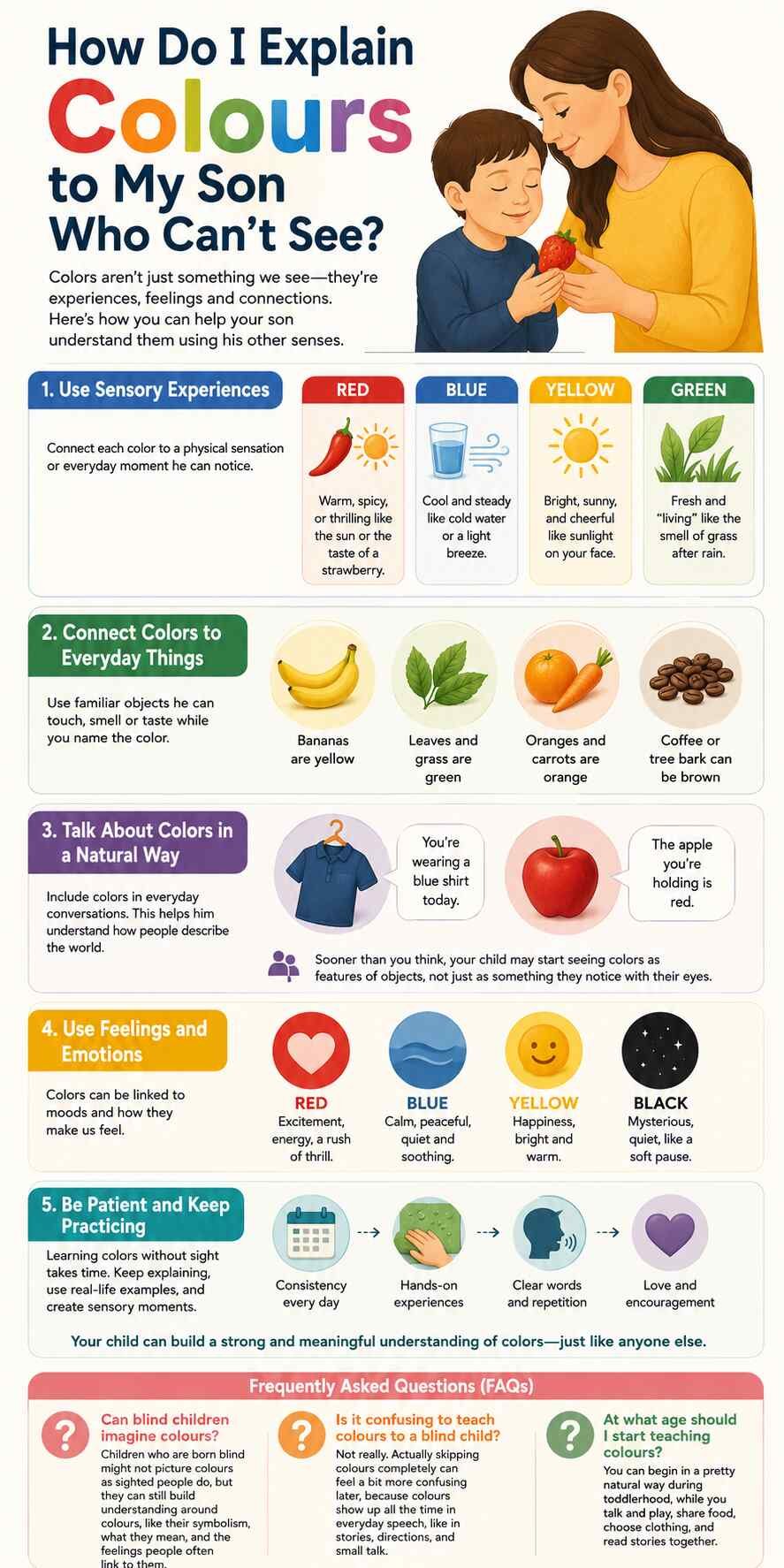
One of the simplest approaches is to connect each colour to a physical sensation or everyday moment, something he can notice right away.
- Red can be warm, spicy, or even a bit thrilling, like the heat from the sun, or the taste of a strawberry.
- Blue feels cool and steady like cold water, or a light breeze that moves through hair.
- Yellow feels bright, sunny, and cheerful, like the way sunlight warms your face.
- Green feels fresh and “living” like the smell of grass, or plants after rain.
When you link colours to sensations, your child can form strong, meaningful associations even without sight.
Connect Colors to Everyday Things
A good approach describes the colors of stuff your child meets each day, like really simple objects. For instance:
- Bananas are yellow
- Leaves and grass are green
- Oranges and carrots are orange
- Coffee or tree bark can be brown
It can help to let your child touch, smell, or even taste these items while you name the color. This makes the link stronger between the thing and the color idea.
Talk About Colors in a Natural Way
Some parents hold back on color talk because they think it might bother their child. Still, many experts say the opposite can work better. Colors are used in everyday speech and culture, so bringing them into regular conversations helps kids understand how people describe the world. For example, you could say:
- “You’re wearing a blue shirt today.”
- “The apple you’re holding is red.”
Sooner than you think, your child may start seeing colors as features of objects, not just as something they notice with their eyes.
Use feelings and emotions
Colors, you know, can be explained through moods and what they make someone feel inside:
- Red can stand for excitement, or just that rush of energy.
- Blue might feel calm and peaceful, almost slow.
- Yellow can mean happiness, bright and warm.
- Black may seem mysterious or quiet, like a soft pause.
When you link colors to emotions like this, kids often understand them in a more abstract but also meaningful way.
Be patient, and keep practicing
Learning colors without sight takes time, not just one day or two. The aim isn’t that your child will “see” colors; instead, it’s about learning what they mean, and how they connect. If you keep explaining things clearly, add real-life examples, and give sensory moments to explore, your child can build a solid understanding of colors, basically just like anyone else does.
Conclusion
If you’re thinking “my son can’t see how I explain colours to him,” then remember this: colours are more than something we look at. They’re feelings, lived experiences, and connections to the world around us. By using touch, taste, smell, sound, and emotions together, you can help your child find that beautiful language of colors in a way that actually makes sense to them.
Frequently Asked Questions (FAQs)
Can blind children imagine colours?
Children who are born blind might not picture colours as sighted people do, but they can still build understanding around colours, like their symbolism, what they mean, and the feelings people often link to them.
Is it confusing to teach colours to a blind child?
Not really. Actually skipping colours completely can feel a bit more confusing later, because colours show up all the time in everyday speech, like in stories, directions, and small talk.
At what age should I start teaching colours?
You can begin in a pretty natural way during toddlerhood, while you talk and play, share food, choose clothing, and read stories together.

Read Dive is a leading technology blog focusing on different domains like Blockchain, AI, Chatbot, Fintech, Health Tech, Software Development and Testing. For guest blogging, please feel free to contact at readdive@gmail.com.