
Introduction
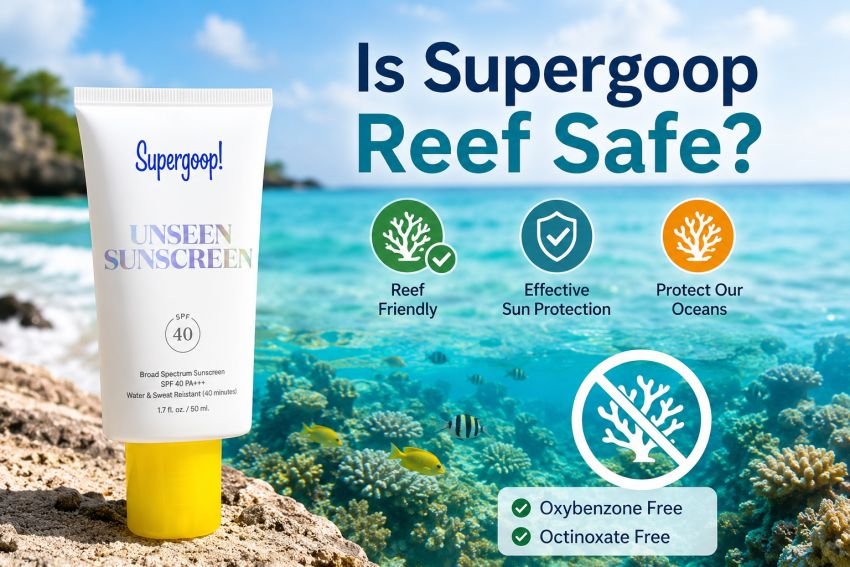
Choosing the right sunscreen is about more than protecting your skin from harmful UV rays. Many people also want products that minimize their impact on the environment, especially coral reefs and marine ecosystems. This has led to a common question among beachgoers, travelers, and environmentally conscious shoppers: Is Supergoop Reef Safe?
The answer is not as simple as a yes or no. Supergoop offers a wide variety of sunscreen products, and their formulas differ. Some products use mineral UV filters that are generally considered more reef-friendly, while others rely on chemical UV filters that may not meet the reef-safe regulations enforced in certain locations.
In this guide, you’ll learn what “reef safe” actually means, how Supergoop products compare, which ingredients to look for, and how to choose the best sunscreen for both your skin and the ocean.
What Does “Reef Safe” Mean?
The term “reef safe” has become popular in the skincare industry, but it is not officially regulated by the U.S. Food and Drug Administration (FDA). Instead, it generally refers to sunscreens that avoid ingredients believed to contribute to coral reef damage.
Research has focused primarily on two chemical UV filters:
- Oxybenzone
- Octinoxate
These ingredients have been linked in laboratory studies to coral bleaching, developmental issues in coral larvae, and stress on marine ecosystems. As a result, several destinations, including Hawaii and parts of the Caribbean, have restricted the sale of sunscreens containing these ingredients.
Because there is no universal legal definition, different brands may use the phrase “reef safe” differently.
Is Supergoop Reef Safe?
Many shoppers ask, Is Supergoop Reef Safe? The most accurate answer is that it depends on which product you purchase.
Supergoop manufactures both mineral and chemical sunscreens. While many of its formulas are made without oxybenzone and octinoxate, not every sunscreen in its lineup is automatically considered reef-safe by environmental organizations or local regulations.
If you’re visiting marine protected areas or locations with strict sunscreen laws, always read the ingredient label rather than relying solely on marketing claims.
Understanding Supergoop’s Sunscreen Types
Supergoop’s collection generally falls into two categories.
Mineral Sunscreens
Mineral sunscreens use physical UV filters such as:
- Zinc Oxide
- Titanium Dioxide
These minerals sit on the skin’s surface and reflect much of the sun’s UV radiation. Non-nano zinc oxide is commonly regarded as one of the better choices for people seeking environmentally conscious sunscreen options.
Benefits include:
- Suitable for sensitive skin
- Broad-spectrum protection
- Generally accepted in many reef-protection regulations
Chemical Sunscreens
Chemical sunscreens absorb UV rays and convert them into heat before they can damage the skin.
Depending on the specific formula, they may contain ingredients such as:
- Avobenzone
- Homosalate
- Octisalate
- Octocrylene
Some of these ingredients remain under scientific evaluation regarding their long-term environmental effects.
Ingredients to Check Before Buying
Regardless of the brand, reading the ingredient list is the best way to make an informed decision.
Generally preferred for reef-conscious consumers:
- Non-nano Zinc Oxide
- Non-nano Titanium Dioxide
Ingredients many reef regulations discourage:
- Oxybenzone
- Octinoxate
Some environmental organizations also recommend researching newer chemical UV filters because scientific studies continue to evolve.
Why Reef Protection Matters
Coral reefs cover less than one percent of the ocean floor, yet they support roughly one-quarter of all marine species.
Healthy reefs provide many important benefits:
- Habitat for marine life
- Coastal protection from storms
- Tourism opportunities
- Fisheries that support local communities
- Biodiversity conservation
Although sunscreen is only one of many factors affecting reef health, reducing unnecessary chemical exposure can be one small step toward protecting these valuable ecosystems.
How to Choose a Reef-Conscious Sunscreen
If protecting marine environments is important to you, consider these practical tips.
Read the Ingredient Label
Marketing phrases like “reef friendly” or “ocean safe” may not always reflect local regulations. The ingredient list provides the most reliable information.
Choose Mineral Formulas
Mineral sunscreens containing non-nano zinc oxide are often recommended for swimming, snorkeling, and diving.
Follow Local Laws
Some popular travel destinations have sunscreen regulations that prohibit certain ingredients. Check local requirements before your trip.
Apply Sunscreen Correctly
Use sunscreen about 15 minutes before going outdoors and reapply every two hours, or after swimming and sweating.
Wear Protective Clothing
Sun-protective shirts, hats, sunglasses, and umbrellas reduce your reliance on sunscreen while offering excellent UV protection.
Supergoop and Sustainability
Supergoop has taken several steps toward improving product safety and sustainability. Many of its products are formulated without oxybenzone and octinoxate, reflecting growing consumer demand for cleaner sunscreen options.
The company also focuses on broad-spectrum UV protection, lightweight formulas, and products designed for different skin types.
However, environmental experts encourage consumers to evaluate each sunscreen individually because ingredient lists vary across product lines.
How Supergoop Compares
| Feature | Mineral Supergoop Products | Chemical Supergoop Products |
|---|---|---|
| Main UV Filters | Zinc Oxide, Titanium Dioxide | Chemical UV filters |
| Good for Sensitive Skin | Yes | Usually, depending on skin type |
| Commonly Accepted in Reef Regulations | Often Yes | Depends on ingredients |
| White Cast | May be slightly visible | Usually invisible |
| Texture | Creamier | Lightweight and clear |
| Water Activities | Popular choice | Depends on local regulations |
Common Misunderstandings About Reef-Safe Sunscreen
Many people believe that any sunscreen labeled “reef safe” has been officially certified. In reality, there is no worldwide certification system.
Another misconception is that mineral sunscreen is automatically harmless to marine life. Even mineral products should be used responsibly because excessive sunscreen entering the ocean can contribute to pollution.
Finally, sunscreen alone is not responsible for reef decline. Climate change, warming oceans, pollution, overfishing, and coastal development remain the largest threats to coral ecosystems.
Practical Example
Imagine you’re planning a snorkeling vacation in Hawaii.
You grab a bottle of sunscreen labeled “reef friendly.” Before packing it, you check the ingredients and notice it contains oxybenzone. Even though the packaging sounds environmentally friendly, that sunscreen may not comply with Hawaii’s regulations.
Instead, choosing a mineral sunscreen made with non-nano zinc oxide gives you greater confidence that you’re following local guidelines while protecting your skin.
This simple habit can help travelers make smarter purchasing decisions.
Conclusion
So, Is Supergoop Reef Safe? The answer depends on the specific product you choose. Supergoop offers both mineral and chemical sunscreen formulas, and many of its products avoid ingredients like oxybenzone and octinoxate that have been restricted in some regions.
If reef protection is one of your priorities, don’t rely solely on front-label claims. Read the ingredient list carefully, understand the regulations where you’re traveling, and choose products that align with both your skin’s needs and your environmental values.
A thoughtful sunscreen choice helps protect you from harmful UV rays while supporting healthier oceans for future generations.
Frequently Asked Questions
1. Is Supergoop Reef Safe for Hawaii?
Some Supergoop mineral sunscreens may comply with Hawaii’s sunscreen regulations, but always check the ingredient list before purchasing.
2. Which Supergoop sunscreen is most reef-friendly?
Generally, mineral formulas that use non-nano zinc oxide are considered the better option for environmentally conscious consumers.
3. Does reef-safe sunscreen protect as well as regular sunscreen?
Yes. When applied correctly, reef-conscious mineral sunscreens can provide excellent broad-spectrum UVA and UVB protection.
4. Why are oxybenzone and octinoxate controversial?
Some scientific studies suggest these chemicals may contribute to coral reef stress, leading several regions to restrict their use.
5. Is mineral sunscreen better for sensitive skin?
In many cases, yes. Mineral sunscreens are often less likely to cause irritation and are commonly recommended for sensitive skin.
6. Can I still wear sunscreen while snorkeling?
Absolutely. Choose a mineral sunscreen that meets local regulations, apply it properly, and combine it with UV-protective clothing whenever possible.

Read Dive is a leading technology blog focusing on different domains like Blockchain, AI, Chatbot, Fintech, Health Tech, Software Development and Testing. For guest blogging, please feel free to contact at readdive@gmail.com.