
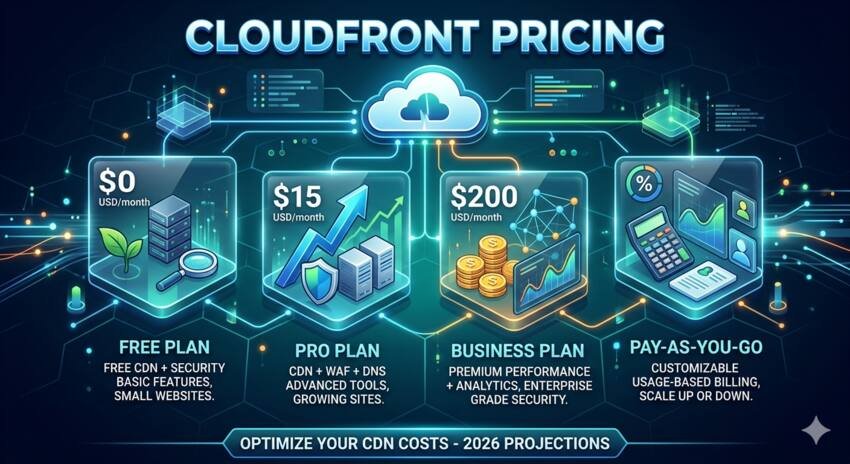
CloudFront pricing has become one of the most talked-about things among cloud engineers and DevOps folks in 2026, you know, like all the time in Slack. As more businesses depend on content delivery networks (CDNs) to speed things up, understanding CloudFront pricing is kind of crucial for keeping cloud costs under control and steadily scaling applications.
In recent years, AWS has rolled out several changes that kind of reshape how developers and companies end up paying for CDN services. From flatter rate plans to more pricing transparency, the CloudFront pricing model is moving around to cut down on uncertainty while still supporting those high-traffic workloads that never really chill.
This piece looks at the latest patterns in CloudFront pricing, what they mean for organizations, and how teams can tune their CDN spending without playing whack-a-mole with the bill.
1. The Shift Toward Flat-Rate CloudFront Pricing
One of the major recent developments in CloudFront pricing is the arrival of flat-rate pricing plans. Before that, CloudFront usually followed a strict pay-as-you-go approach where costs were tied to data transfer, request volume, and the optional stuff you turned on.
AWS introduced flat-rate plans to simplify billing and to reduce those nasty surprise spikes in CDN costs. With these plans, multiple services are bundled into a more predictable monthly amount. Amazon CloudFront flat-rate plans generally cover CDN delivery, web application firewall protection, DNS, logging, and edge compute services, all under one subscription.
Flat-rate tiers usually come with options like
- Free plan
- Pro plan (~$15/month)
- Business plan (~$200/month)
- Premium plan (~$1,000/month)
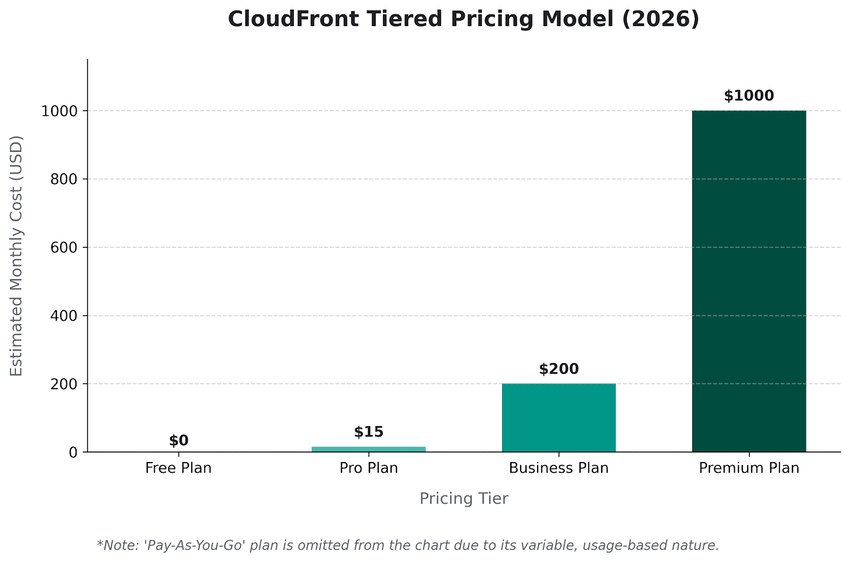
These tiers bundle services such as WAF, DDoS protection, and DNS management, which makes CloudFront pricing easier to estimate for startups and fast-growing platforms, at least compared to the old model, where everything could swing around.
2. Configurable usage allowances for High-Traffic applications
Another big trend in CloudFront pricing is flexible usage allowances, even when you’re on a flat-rate plan.
In 2026, AWS expanded the premium flat-rate plan so it could handle adjustable usage levels. Now customers can scale their allowance up to 6 billion requests and 600 TB of data transfer per month while keeping billing pretty predictable. This change is aimed at orgs that see traffic explode, and don’t want to keep changing pricing approaches every few months.
Instead of going back and forth to pay-as-you-go pricing, they can just raise the allowance inside the plan.
For enterprises running large-scale web applications or streaming platforms, this flexibility feels like a real step forward for CloudFront pricing transparency, because it makes expectations easier to plan.
3. Pay-As-You-Go Pricing Still Dominates
Even with the growing push toward flat-rate approaches, pay-as-you-go is still a main pillar in cloudfront pricing. With that setup, users basically pay for:
- Data transfer out to the internet
- HTTP and HTTPS request volume
- Optional features, like logging or edge computing
For example, the first 1 TB of data transfer might be free in some regions, while extra usage usually starts around $0.085 per GB, depending on where the traffic comes from.
Request pricing is generally calculated per 10,000 requests, and it can differ between HTTP and HTTPS traffic. This model is often best for:
- Small websites
- Applications with unpredictable traffic
- Projects still in early development
Many startups keep leaning on pay-as-you-go cloudfront pricing because it sidesteps upfront commitments, and that helps when budgets are tight or growth is uncertain.
4. Bundled Security Features Are Turning into the Norm
One more trend showing up in CloudFront pricing is that security features are getting bundled right into the CDN packages, kind of like default add-ons that you don’t even think about much. For flat-rate plans, you’ll now usually see a bundle that includes:
- Web Application Firewall (WAF)
- DDoS protection
- Bot management
- Edge compute capabilities
- Real-time monitoring and analytics
These bundled items help a lot with reducing the urge ( or necessity, depending on how you look at it ) to pay separately for multiple AWS security tools. Earlier, developers would have to stitch several services together—each with its own pricing structure and timing rules, so to speak, just to keep applications covered.
Now, since AWS is integrating these services into the core pricing model, CloudFront pricing looks a bit more straightforward for businesses overall, even if the details are still “under the hood”.
5. Cost Optimization Is Becoming a Bigger Deal
As cloud spending keeps climbing, a lot of organizations are putting more emphasis on optimizing cloudfront pricing. Cost management is becoming more and more necessary for DevOps teams, not just something for finance to chase later. Some of the more useful optimization techniques are:
- Using caching rules to shrink origin requests
- Compressing content so data transfer costs stay lower
- Picking edge locations strategically
- Keeping an eye on usage with AWS billing tools
And because CloudFront pricing varies by geography, request types, and additional features added over time, tuning your configurations can significantly reduce CDN costs.
Conclusion
The landscape of CloudFront pricing is evolving quickly as AWS responds to developer demand for simplicity and predictable costs. The introduction of flat-rate plans, scalable usage allowances, and bundled security features represents a major shift away from purely usage-based billing. However, pay-as-you-go pricing remains a flexible option for smaller workloads and experimental projects.
As cloud infrastructure continues to scale globally, businesses must stay up to date on the latest CloudFront pricing trends to balance performance, security, and cost efficiency. By understanding these changes and implementing smart optimization strategies, organizations can get the most value from their CDN investments.
Frequently Asked Questions (FAQs)
What is CloudFront pricing based on?
CloudFront pricing traditionally depends on data transfer, HTTP/HTTPS requests, and optional services. However, AWS now also offers flat-rate pricing plans that bundle multiple services into a single monthly cost.
What are the new CloudFront pricing tiers?
The main flat-rate tiers include Free, Pro, Business, and Premium plans, each offering different levels of requests, data transfer, and included features.
Does CloudFront charge for traffic spikes?
With the new flat-rate pricing plans, many traffic spikes are covered within the monthly plan allowance, helping prevent unexpected billing surprises.
Is CloudFront pricing suitable for startups?
Yes. Startups often benefit from predictable pricing and built-in security features, which reduce infrastructure complexity and operational risk.
Can I upgrade my CloudFront pricing plan anytime?
Yes. AWS allows users to upgrade or change their pricing plans through the CloudFront console, enabling businesses to scale resources as traffic grows.

Read Dive is a leading technology blog focusing on different domains like Blockchain, AI, Chatbot, Fintech, Health Tech, Software Development and Testing. For guest blogging, please feel free to contact at readdive@gmail.com.