
.I once spent an afternoon at a Porsche service center, and the thing that stayed with me had nothing to do with speed. A technician was explaining why a specific bracket, hidden deep inside the chassis where no owner will ever see it, gets the same tolerance check as a visible body panel. His logic was simple. The part you can’t see is holding up the part you can. That idea is the entire philosophy behind how I think about payment infrastructure. The customer sees a checkout button. Underneath it sits a system where a single loose bracket can cost someone their money, their trust, and their business.
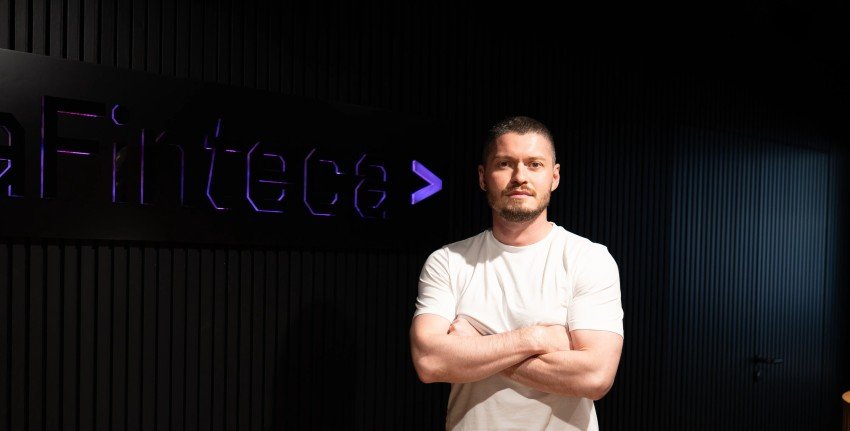
I’m Dmytro Rukin, CEO of LaFinteca, and I’ve spent years building payment systems across Latin America. The German engineering mindset, precision at every layer, no beautiful surface sitting on a weak foundation, turned out to be the most useful mental model I’ve carried into fintech. Let me explain why.
Why does engineering discipline matter more in payments than in most software?
In most software, a bug means a bad afternoon. You ship a fix, you apologize, everyone moves on. In payments, a bug means someone’s salary didn’t arrive, a merchant’s payout froze, a refund vanished into a reconciliation gap. Money has memory. Every transaction has to be traceable, reversible, and correct down to the cent, across currencies, regulators, and settlement cycles that don’t agree with each other.
That’s the part outsiders underestimate. Building a payment rail in Brazil is not the same problem as building one in Mexico or Colombia. Each market has its own regulator, its own clearing schedule, its own failure modes. The engineering discipline German automakers apply to a drivetrain is the same discipline a payment company needs across five regulatory environments at once. You test the invisible parts hardest, because those are the ones that break quietly.
What does “precision at every level” actually look like in fintech?
Precision in payments is boring on purpose. It looks like a testing environment that simulates a bank going offline mid-transaction to see whether your system fails safely or fails loudly. It looks like reconciliation logic that catches a one-cent mismatch before a human ever does. It looks like refusing to launch a feature until it survives conditions worse than anything production will realistically throw at it.
Porsche engineers test parts at temperatures and stresses a driver will never encounter. The logic transfers directly. If your infrastructure only works when everything goes right, I’m sorry to tell you this, but you have a demo.
At LaFinteca, this shows up in decisions that look slow from the outside and obvious in hindsight. Two examples.
The first is how we handle payment rail failures. In March 2025, Pix, Brazil’s real-time payment system that processes billions of transactions, had a brief outage. Merchants who had wired their entire checkout to a single rail simply stopped collecting money for those hours. The teams who had built fallback logic and multi-rail routing kept running. We belong to the second group, and that was the result of asking an unglamorous question early: what happens the day the most reliable rail in the country stops answering? Answering that question took engineering patience. Skipping it looks faster right up until the outage.
The second is approval rates. A lot of companies entering LATAM measure success by a headline number. A 92% approval rate feels solid. Then you look closer and see the missing 8% is concentrated in exactly the local payment methods that dominate the market, and the “solid” number was hiding a structural failure. We spent real time instrumenting where and why transactions fell, market by market, method by method. That work is tedious. It’s also the difference between a system that looks healthy on a dashboard and one that actually is.
Why does slower engineering beat faster shortcuts in the long run?
Speed is a real advantage right up to the moment it isn’t. In consumer apps, moving fast and breaking things is a viable strategy because the cost of breakage is low. In financial infrastructure, the cost of breakage is someone else’s money, and that cost compounds. Every silent failure erodes trust that took years to build. The competitors who move loose and fast tend to win the demo and lose the decade.
Latin America is where I’ve watched this play out, and it’s the starting point for what we’re building rather than the ceiling. The ambition runs wider than one region. What stays constant everywhere is the standard. A payment system earns the right to expand by proving it doesn’t break under pressure, not by promising it won’t.
The companies that win in fintech over the next ten years will be the ones that treated the invisible parts of their infrastructure with the same seriousness as the parts customers see.
That’s the takeaway I’d stake my reputation on. Trust in payments is won in the brackets nobody looks at, tested to a standard higher than the job requires. German engineering taught me that discipline is a form of respect for the person on the other end of the transaction. In payments, that person is trusting you with their money. You owe them precision they’ll never see.

Read Dive is a leading technology blog focusing on different domains like Blockchain, AI, Chatbot, Fintech, Health Tech, Software Development and Testing. For guest blogging, please feel free to contact at readdive@gmail.com.