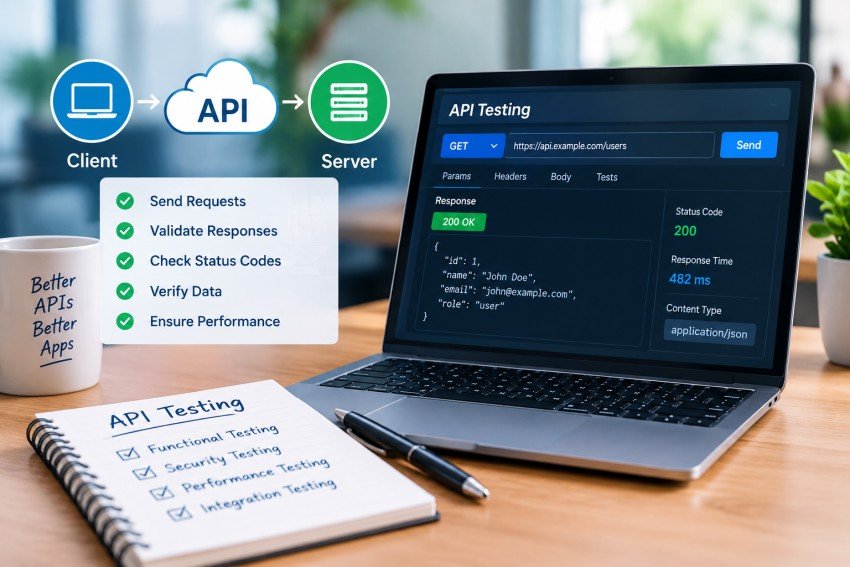

Banking apps are very difficult, driven by the multi-layered nature of financial services and the strict regulatory demands they must meet. These apps entail different functionalities, like fundamental account management, sophisticated financial transactions, compliance monitoring, and investment services.
The complexities of these systems necessitate a high level of reliability and precision. Any small mistake can lead to important security vulnerabilities and financial inconsistencies. This makes comprehensive banking app testing significant.
Banking software testing services protect important financial data. This guarantees compliance with stringent industry regulations (e.g., PCI-DSS, GDPR) and safeguards against expensive mistakes. Expert testing ensures a flawless digital user experience, shields against huge cyber attacks, and guarantees scalable and continuous performance during peak traffic time.
With these benefits in mind, let’s explore some of the key ways banking software testing enhances security and regulatory compliance.
Here Are 10 Ways Banking Software Testing Enhances Security and Compliance
1. It Assists The Organization in Managing Regulatory Requirements and Complex Banking Situations
Expert testers can navigate complex workflows and guarantee compliance with the changing banking regulations. This offers a higher testing quality that might be difficult to attain internally. This is because it authenticates data encryption, multi-factor authentication, and API security to safeguard against data breaches.
2. It Offers Access To Testers With Expert Banking Knowledge
Banking software testing companies have expert testers with comprehensive expertise in banking-specific requirements and processes. These specialists are pro are managing difficult business situations and understanding difficult regulatory needs. It guarantees that software meets all important standards.
3. It Provides Transaction Accuracy
It guarantees that money transfers, fees, and interest rates are processed perfectly with zero data discrepancies.
4. Incorporation of Machine Learning and Artificial Intelligence for Enhanced Test Accuracy and Coverage
Advanced technologies like ML and AI are sometimes used by outsourcing companies to improve accuracy and test coverage. This pinpoints problems that traditional testing techniques might miss.
5. Options To Select from Various Pricing Frameworks
These pricing models are fixed contracts and pay-per-use. Financial organizations can select from various pricing frameworks that are suitable for their budgets and needs. This offers more flexibility.
6. Guaranteeing 24/7 Testing Cycles
Banking software testing companies use 24/7 testing cycles by incorporating global time differences. By relying on worldwide teams, outsourcing companies can offer non-stop testing services. This significantly accelerates the overall development process and decreases time to market.
7. Reduced Administrative Overheads
There decreases administrative overhead for managing the testing teams. Management of an in-house testing team need important administrative effort. Outsourcing decreases this burden by freeing up management to concentrate on long-term initiatives.
8. Best Practices For Security Testing
Security is important in banking apps. Outsourced testing teams bring best practices and modern security testing techniques to protect sensitive financial data.
9. Scaling Performance
Replicates concurrent, heavy transaction loads to safeguard against bottlenecks and downtime during high-volume periods.
10. System Integration and Quicker Releases
They guarantee flawless communication between basic banking systems, 3rd party APIs, and CRM tools. It incorporates automated testing models to speed up time-to-market for latest banking features without any compromises on the quality.
In The End…..
After viewing the discussion above, it can be said that outsourcing banking software testing is multifaceted and important. By collaborating with expert banking software testing service providers, financial companies can attain superior quality with fewer defects. This guarantees a flawless and safe customer experience. Therefore, it can be said that outsourcing accelerates the testing process and gives access to the latest testing technologies and expert resources. This is very expensive to create in-house. In addition, it permits banks to relocate their internal resources to basic business functions. This fosters growth and innovation.
FAQs:
1. What is banking software testing?
It is the process of testing banking applications to ensure they are secure, reliable, and error-free.
2. Why is banking software testing important?
It helps protect customer data, ensures compliance, and prevents costly software failures.
3. What types of testing are used for banking applications?
Common types include functional, security, performance, API, integration, and regression testing.
4. Why do banks outsource software testing?
Outsourcing provides skilled testers, advanced tools, lower costs, and faster testing cycles.
5. How does banking software testing improve security?
It identifies vulnerabilities, prevents cyberattacks, and protects sensitive financial information.
6. Can automated testing be used in banking software?
Yes. Automated testing speeds up testing, improves accuracy, and supports continuous software updates.
7. How often should banking applications be tested?
Banking applications should be tested regularly, especially before releases, updates, and security patches.

Read Dive is a leading technology blog focusing on different domains like Blockchain, AI, Chatbot, Fintech, Health Tech, Software Development and Testing. For guest blogging, please feel free to contact at readdive@gmail.com.