
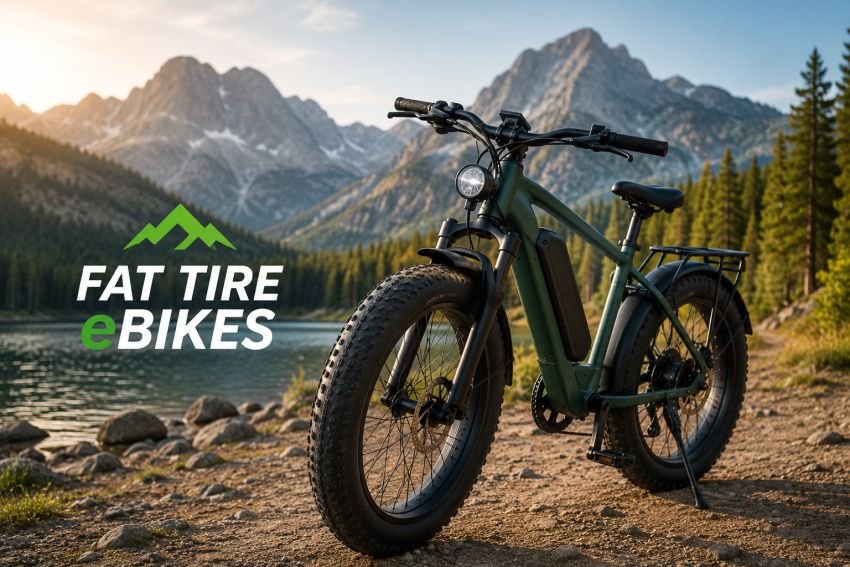
If you enjoy exploring beyond smooth streets, a fat tire eBike can open the door to a different kind of ride. Gravel roads, firm dirt, sandy sections, and uneven outdoor routes become more approachable when electric assistance works with tires and suspension designed for changing ground.
That does not mean every wide-tire bike belongs on every trail. A capable off-road eBike still needs controllable power, useful range, reliable brakes, and a frame built for the terrain. Riders also need to follow local access rules. Get those pieces right, and the bike becomes less about chasing maximum speed and more about reaching places that would otherwise demand more time and energy.
Let’s look at why fat tire electric bikes have become popular for outdoor exploration, camping, and hunting access, and what separates a true adventure-ready model from a bike that simply has wide tires.
What Is a Fat Tire eBike?
A fat tire eBike combines electric assistance with tires that are usually around four inches wide. The larger tire volume creates a broader contact patch and allows riders to adjust pressure within the manufacturer’s approved range. On loose or rough surfaces, that can improve stability and help the bike feel less nervous than a narrow-tire model.
The tires also provide some natural cushioning over small bumps. However, width alone does not turn a bike into an off-road machine. Tires cannot replace suspension when the route includes repeated impacts, and extra motor power is not useful if it arrives too suddenly for the available traction.
A well-designed fat tire electric bike treats the tires as one part of a larger system. Motor response, suspension, geometry, braking, and range all need to support the same purpose.
Why Use an Off-Road eBike for Outdoor Adventure?
Traditional bikes reward fitness and simplicity, but long climbs and loose surfaces can limit how far some riders feel comfortable exploring. An off-road electric bike adds assistance where the route demands more effort, helping the rider conserve energy for the rest of the day.
The advantage is not that the motor removes every challenge. The rider still has to choose a line, manage traction, brake early, and respond to changing terrain. Electric assistance simply gives the route more flexibility.
Exploring gravel and dirt roads
Many outdoor rides are not technical mountain-bike trails. They follow forest roads, gravel connectors, ranch roads, or firm dirt paths where stability and comfort matter more than aggressive downhill handling. A fat tire eBike suits this middle ground well. It can roll across changing surfaces while providing support when the road turns uphill or becomes soft.
Reaching hunting areas with less disruption
For hunters, an electric bike can offer a lower-noise alternative to a gas-powered vehicle on legal access routes. It can also carry equipment without requiring the rider to wear everything in a heavy backpack. A stable bike with predictable assistance is especially useful when the return trip includes more gear or arrives after a long day outdoors.
Access comes first. Public land agencies, private properties, and individual trail systems may treat electric bikes differently, and seasonal restrictions can apply. Hunters should confirm where motorized or electric bicycle use is permitted before planning the route.
Making camp-based exploration easier
At a campsite or cabin, a fat tire electric bike can turn a nearby road or trail into part of the trip. Instead of moving a larger vehicle for a short outing, riders can explore from where they are staying. Longer range is valuable here because outdoor routes may not offer convenient charging, and climbing or soft ground can use more battery than a paved ride.
What Makes a Fat Tire eBike Adventure-Ready?
Large tires may be the most visible feature, but they should not be the only reason to choose a bike. Look at how the complete setup handles traction, repeated bumps, distance, and additional weight.
- Controllable assistance: Smooth power delivery helps the rear tire maintain traction on gravel, dirt, and loose climbs. A higher wattage number does not automatically mean better off-road control.
- Appropriate suspension: A front fork can manage lighter off-road use. Full suspension becomes more useful when the route brings repeated ruts and impacts to both wheels.
- Realistic range: Hills, soft surfaces, cold weather, rider weight, and cargo can all reduce distance. The claimed maximum should leave room for a return-trip buffer.
- Reliable braking: A heavier bike carrying outdoor equipment needs predictable stopping power, especially on descents or wet ground.
- Useful carrying capacity: Payload includes the rider and everything placed on the bike. Rack ratings and attachment points should be checked separately before adding gear.
- Electrical safety and weather protection: Clear UL certification and IP ratings provide useful information for a bike expected to spend time outdoors.
Velotric Nomad 2X: A Strong Overall Choice for Outdoor Riding
The Velotric Nomad 2X brings these features together in a full-suspension fat tire eBike designed for mixed terrain. Its 750W rear-hub motor produces up to 1,400W of peak power and 105Nm of torque, giving the bike support for climbs, heavier loads, and loose ground.
The Kenda puncture-resistant tires provide the broad footprint expected from an adventure-focused fat tire eBike. A 120mm adjustable air fork works with 80mm of rear-wheel travel, allowing the suspension to manage larger and repeated impacts after tire cushioning reaches its limit. This makes the Nomad 2X well suited to gravel, forest roads, moderate trails, and other mixed-surface routes rather than aggressive technical singletrack.
Range and carrying capacity for longer days
The pedal-assist range reaches up to 75 miles, although real-world distance will depend on terrain, assistance level, temperature, and load. A maximum payload capacity of 560 pounds gives the bike room for a wider range of riders and outdoor equipment. As with any e-bike, riders should count themselves and all cargo when checking that limit.
Those numbers make the bike useful for more than a quick trail loop. They provide a larger operating window for a day of exploring or a hunting route where the return journey matters as much as the ride out. The sensible approach is still to plan around the hardest part of the route and return with battery in reserve.
Low-profile riding and outdoor protection
Nomad 2X also includes Stealth Mode, designed for a lower-profile, quiet riding experience. That feature can be valuable for hunting access or early outdoor trips, although no bike is completely silent and riders should still respect wildlife, other trail users, and local hunting regulations.
The bike carries an IPX6 rating, while the battery is rated IPX7. Its electrical system is certified to UL 2849, and the battery is certified to UL 2271. These ratings do not remove the need to follow the manual for cleaning, charging, and weather exposure, but they give riders clearer information about the systems they are taking outdoors.
Tektro hydraulic disc brakes use a 203mm front rotor and a 180mm rear rotor. The larger front rotor supports the wheel that handles more of the braking load, while integrated lighting with brake and turn-signal functions improves visibility when an outing begins early or finishes late.
Tips for a Better Off-Road eBike Adventure
- Confirm access before the ride. Check the rules for the exact road, trail, park, or hunting area. An e-bike allowed on one route may be prohibited on the next.
- Set tire pressure for the surface. Stay within the approved range and avoid assuming that the lowest pressure always provides the best grip.
- Use power progressively. Sudden assistance can break traction on loose ground. Start with a controlled setting and increase support when the surface allows it.
- Protect the return range. Turn back before half the usable battery is gone when the return route climbs or conditions may worsen.
- Secure every load. Keep equipment balanced and make sure straps, bags, and loose items cannot reach the wheels, brakes, or drivetrain.
- Ride within your skill level. Fat tires and suspension add capability, but they cannot correct poor line choice or excessive speed.
Final Thoughts
A good fat tire eBike turns outdoor riding into more than a test of motor power. It combines traction, controlled assistance, suspension, range, and braking so the rider can handle changing ground with more confidence.
For gravel exploration, camp-based rides, and legal hunting access, the Nomad 2X offers a well-rounded combination of power and full-suspension comfort. Its wide tires help it find stability, while SensorSwap™, long claimed range, Stealth Mode, and substantial carrying capacity support the practical side of a day outdoors.
Choose the route carefully, respect access rules, and leave enough battery for the way back. The best off-road adventure is not simply the fastest one. It is the one that gives you more country to explore and brings you home with the bike—and the plan—still working.

Read Dive is a leading technology blog focusing on different domains like Blockchain, AI, Chatbot, Fintech, Health Tech, Software Development and Testing. For guest blogging, please feel free to contact at readdive@gmail.com.